
Pension drawdown and tax, explained without the headache
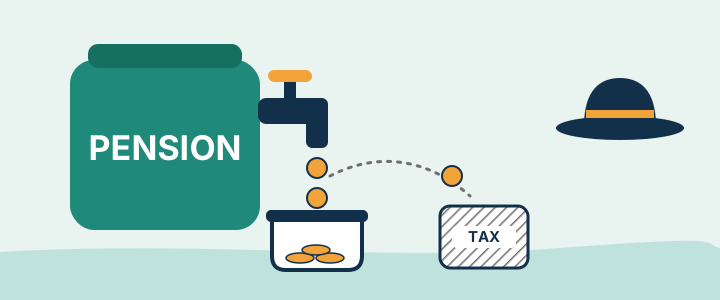
"Drawdown" sounds like something a cowboy does at high noon. In fact it's much calmer: your pension stays invested, and you take money out of it when you choose. The tricky bit isn't the drawing. It's the tax. So let's draw that down instead.
This guide uses the 2026-27 rates for England, Wales and Northern Ireland. Scotland has its own bands, and the calculator handles those too.
Drawdown in one paragraph
With flexi-access drawdown, you usually take your tax-free cash (up to 25%), and the rest stays invested. You then take income from it whenever you like: monthly, yearly, or in the occasional burst of enthusiasm for a new conservatory. Whatever's left keeps growing (or shrinking, depending on the markets' mood).
How the income is taxed
Money taken from drawdown, beyond the tax-free part, is taxed as income, just like a salary. It's added to everything else you have that year, including your State Pension, and taxed in bands:
| Your total taxable income | Rate on that slice |
|---|---|
| Up to £12,570 (Personal Allowance) | 0% |
| £12,570 to £50,270 | 20% (basic rate) |
| £50,270 to £125,140 | 40% (higher rate) |
| Over £125,140 | 45% (additional rate) |
One sneaky extra: for incomes between £100,000 and £125,140, the Personal Allowance shrinks by £1 for every £2 over, which creates a hidden higher rate in that range. Few retirees get there, but those who do tend to notice.
These thresholds are frozen until 5 April 2031. As incomes and pensions rise with prices, more of each pound gets taxed. This is officially called "fiscal drag", unofficially "the slow pinch".
Worked examples
Worked example: Drawdown on its own
No other income, taking £30,000 of taxable drawdown income in the year:
- First £12,570: no tax
- The rest at 20%
- Income tax: £3,486
£12,570 is tax-free; the rest is taxed at the basic rate. 2026-27 rates, England, Wales and Northern Ireland.
Worked example: Drawdown plus a full State Pension
A full State Pension of about £12,548 a year, plus £20,000 of taxable drawdown:
- The State Pension uses almost all of the Personal Allowance
- Nearly all of the £20,000 is taxed at 20%
- Income tax on the total: £3,996
The second example shows why it can matter when pension income is taken. The same withdrawal can cost very different amounts of tax depending on what else arrives in the same year.
The bits that catch people out
Emergency tax
The first taxable drawdown payment is often taxed on an emergency code, as if you'll get that much every month forever. It's a bit like a waiter assuming you'll order the same dessert twelve times. The excess can be claimed back from HMRC or is put right later in the year.
The money purchase annual allowance
Once you take taxable drawdown income, tax-relieved payments into defined contribution pensions are capped at £10,000 a year. It mostly affects people who are still working and saving.
Big one-off withdrawals
Taking a large sum in one tax year can push part of it into a higher band. Spreading withdrawals across tax years is one way people manage this, but whether it suits anyone depends on their situation.
The State Pension comes without tax taken off
The State Pension is taxable but paid gross. HMRC usually collects the tax on it through the tax code on your drawdown or other pension. So if your drawdown payments look more heavily taxed than you expected, the State Pension may be the reason.
Where tax-free cash fits
You can take all your tax-free cash at the start, or take a quarter of each withdrawal tax-free as you go. Each route has trade-offs, covered in our tax-free cash guide.
What the calculator does
The calculator works out tax every year in each of its 1,000 futures. Its standard order fills each person's Personal Allowance with pension income first, then uses cash, investments and ISAs, then more pension, sharing withdrawals between partners to keep their tax rates level. You can compare that with "pensions first" and "savings first" on the What if page. They're comparisons, not recommendations.
The short version
Drawdown income is taxed like a salary, on top of your other income, including the State Pension. The first £12,570 is usually tax-free, then 20% up to £50,270. The first payment is often over-taxed and can be reclaimed. And once you take taxable income, future pension saving is capped at £10,000 a year.
For free, impartial guidance, see Pension Wise and MoneyHelper.
Sources
- GOV.UK, Income Tax rates and allowances
- GOV.UK, Tax on your pension and how your tax is paid
- GOV.UK, Annual allowance
- GOV.UK, Claim a tax refund on a pension